Michael Mann’s Sources of Power in the Era of Global Fragmentation
Melike Bozkurt and Arbnor Bajraliu
Is the United States a rogue empire? This was the question at the heart of Michael Mann's recent talk at Loughborough University London. As the author of the landmark four-volume The Sources of Social Power and one of the most influential theorists of power, Professor Mann offered a sharp diagnosis of where American foreign policy is heading and why its direction should worry us all. For those of us trying to make sense of an increasingly unstable world’s geopolitical and geoeconomic dynamics, his arguments were hard to ignore.
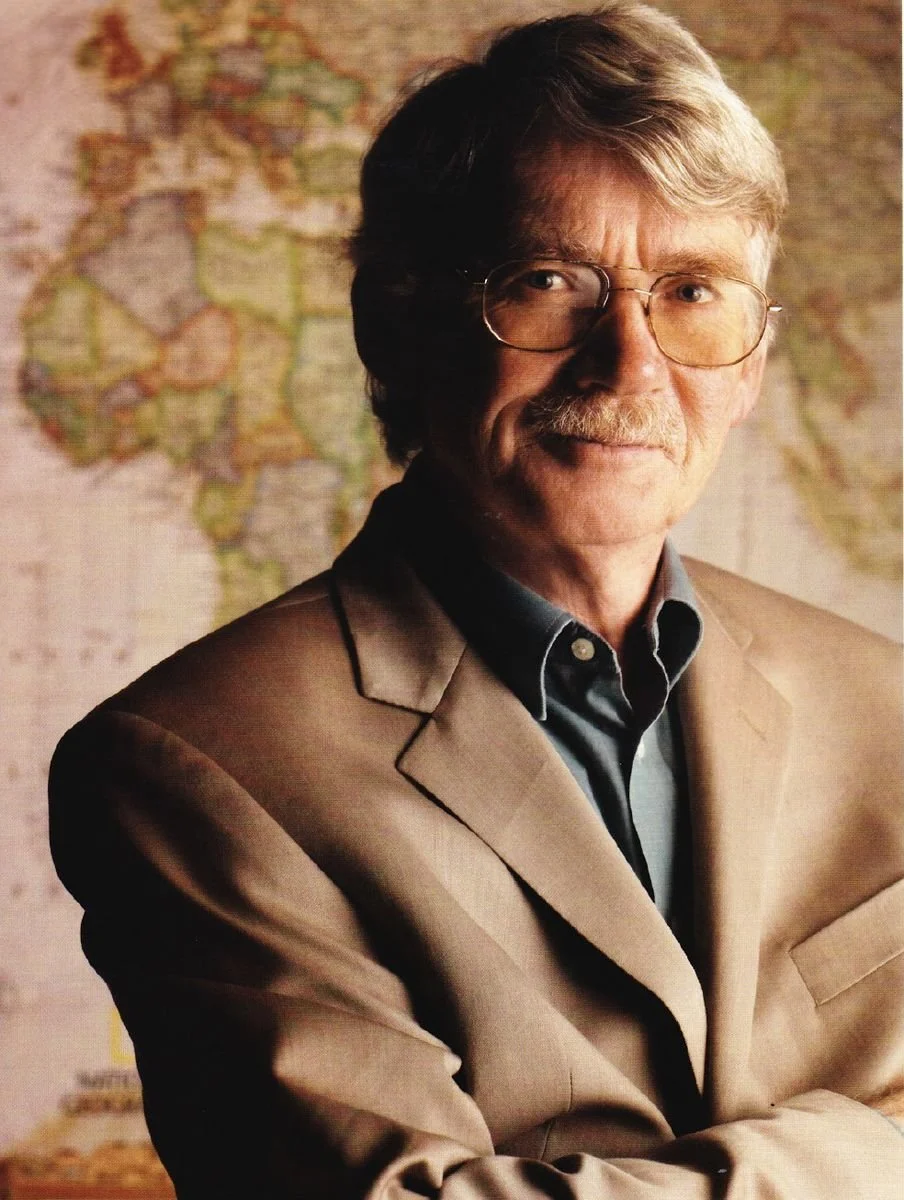
Professor Michael Mann
Professor Mann’s four-volume The Sources of Social Power - spanning from neolithic times[i] to 2011[ii] - traces how ideological, economic, military and political power have interacted to shape human societies. Rather than treating society as a single unified system, he sees it as a series of overlapping and intersecting power networks each with its own logic and trajectory. This framework has guided a remarkably wide-ranging body of his work: Fascists (2004)[iii], The Dark Side of Democracy: Explaining Ethnic Cleansing (2012)[iv], and Incoherent Empire (2003)[v], among others. His most recent book, On Wars (2025)[vi] , argues that wars rarely result from rational calculation but reflect the ideologies, emotions and miscalculations of a handful of political leaders. It was with this extensive work behind him that Mann turned his attention to Trump.
In his talk, Rogue Empire: Trump's Wars, Mann provides a good explanation on why he considers the US today a “Rogue Empire” rather than an “Incoherent Empire”, as he described decades ago. The key reason for this label is Trump's personality and the way he transformed the American state into a personal tool for power. According to Mann, Trump's rise was due to a combination of different structural issues, such as the urban-rural divide, the decline of manufacturing, and the rise of the right-wing politics, which created the condition for a president who bypasses expert advice and pursues a foreign policy defined by short-sightedness and aggression.
His other argument was that Trump’s escalation toward war followed a deliberate pattern, even if his methods looked chaotic. These included the abandonment of treaties and international agreements in the beginning, as well as the use of tariffs as a weaponisation tactic, a zero-sum logic, and finally military actions, first in Venezuela and then Iran. He followed one key lesson learned from the past: no boots on the ground. Instead, he relied on targeted strikes against the adversary leaders and strategic targets, trying not to risk American lives. Venezuela was an example, but Mann pointed out that this worked only because Venezuela lacked the capacity to sustain meaningful resistance. The same cannot be said about Iran.
Trump expected Iran to surrender, but instead he faced a resistance which exposed the limits of his strategy. Iran’s deeply embedded religious identity, resilient institutions with an established logic of succession[vii], and the military capacity of the Islamic Revolutionary Guard Corps (IRGC)[viii] proved harder to break than anticipated. When the leaders were eliminated, the IRGC kept its strongest weapon, control of the Strait of Hormuz[ix], where about twenty per cent of global oil and gas passes through. Going back to his four sources of power and linking them to this war, it meant that the US had an economic and military edge over Iran, but the same cannot be said about its ideological or political power.
What strikes us as international political economy (IPE) researchers, having studied economic interdependencies and how they become tools of statecraft, is that Mann also points out something which is larger than Trump: The Strait of Hormuz. This is a clear example of what happens when economic interdependence gets weaponised. The US can impose tariffs and sanctions, but Iran was able to cut off a chokepoint on which the global economy relies. A global economy that, over the recent decades, focused on the efficiency of supply chains is now disrupted and fragmented around geopolitical lines. A once mutually beneficial, integrated global economy is now becoming a liability to be managed. Reconfiguration of production lines, stockpiling of critical minerals, friendshoring, and re-industrialisation are some of the strategies that states and private actors are using to bring back the control of supply chains. The control of connections of global production networks is becoming a source of power in itself.[x]
Yet the question of who gets to control these connections is neither simple nor settled. The answer depends not only on economic power but on how states position themselves across all four of Mann’s sources of power - economically, politically, militarily and ideologically - in a rapidly changing international order. Iran’s resistance to the US illustrates this well: A non-hegemonic state with limited economic and military resources was able to impose real costs on a hegemon[xi] precisely because it retained ideological power and political control over a critical economic node. Whether other states can draw similar leverage from their own position remains an open question[xii]. However, what Mann’s framework makes clear is that in a world where all four sources of power are being contested, the cost of being caught unprepared might be higher than ever.[xiii]
This may be a moment of strategic recalibration for non-hegemonic powers in an increasingly multipolar world.[xiv] States in non-hegemonic powers are increasingly intervening in their own economies, shielding strategic industries from foreign competition, directing investment into critical technologies and selectively disengaging from supply chains that leave them exposed.[xv] Yet this is not simply a defensive posture. They can also be instruments of opportunity, allowing states to reposition themselves as alternative hubs, critical suppliers or important partners in a reconfiguring global order.[xvi] Whether these strategies of economic statecraft ultimately enhance the state’s strategic autonomy or simply redirect its dependencies toward other hegemonic powers remains, for now, an open question.
Professor Michael Mann’s visit left us with a shaper sense of how quickly the ground is shifting and how much is still unknown. Whether Trump’s America represents a rupture in the international order or an acceleration of long-standing tendencies is a question Mann’s own framework cannot fully resolve. Because, as he reminds us, power is never driven by a single source, there are contingencies in the four sources of power, and its consequences are rarely what anyone intended. What seems clear is that the international order is being remade along new lines of power and dependence and the costs of that transition will not be shared equally.
Watch the Recording
Part 1 - Talk by Prof Michael Mann at LUL on 28 April 2026
Part 2 - Talk by Prof Michael Mann at LUL on 28 April 2026
Part 3 (Q&A) - Talk by Prof Michael Mann at LUL on 28 April 2026
References
[i] Mann, Michael. 1986. The Sources of Social Power: Volume 1, A History of Power from the Beginning to AD 1760. 1st ed. Cambridge University
[ii] ___.2012a. The Sources of Social Power: Volume 4, Globalizations, 1945-2011. 1st ed. Cambridge University Press.
[iii] ___.2004. Fascists. 1st ed. Cambridge University Press
[iv] ___.2012b. The Dark Side of Democracy: Explaining Ethnic Cleansing. 1st ed. Cambridge University Press.
[v] ___.2003. Incoherent Empire. Verso Books.
[vi] ___.2025. On Wars. Yale University Press.
[vii] Jalabi, R. 2026. “A Brief Guide to Iran's Complex Regime.” Financial Times, February 28, 2026. https://www.ft.com/content/44edd1b7-7b28-4b38-b30e-6607e4b148d7
[viii] Izadi, R. 2026. “The War with Iran Made the IRGC Stronger.” Journal of Democracy, April 2026. https://www.journalofdemocracy.org/online-exclusive/the-war-with-iran-made-the-irgc-stronger/
[ix]BBC News. 2025. “Why the Strait of Hormuz Matters So Much in the Iran War.” BBC News, June 23, 2025. https://www.bbc.co.uk/news/articles/c78n6p09pzno
[x] Bajraliu, A., 2025. US and China Sourcing in High-Tech Components – Geopolitical Alignment as a Way to Achieve GVC Domination. Krakow, EISA.
[xi] Byman, D. 2026. “Who Is Winning the Iran War?” Center for Strategic and International Studies, April 2, 2026. https://www.csis.org/analysis/who-winning-iran-war
[xii] Dalacoura, K., T. Dodge, P. Trubowitz, and S. Vakil. 2026. “The Geopolitical Implications of the Israel-US-Iran War.” Panel discussion, Middle East Centre, London School of Economics and Political Science, March 17, 2026. https://www.lse.ac.uk/lse-player/the-geopolitical-implications-of-the-israel-us-iran-war
[xiii] Batmanghelidj, E. 2026. “The Iran War Is Jeopardizing the Entire Global Economy.” Foreign Policy, March 4, 2026. https://foreignpolicy.com/2026/03/04/iran-war-dubai-saudi-qatar-global-economy-oil-shipping-trade/
[xiv] Apaydin, F., M. Sancak, and A. Nölke. 2026. “Introduction to Special Issue: Bridging Comparative and International Political Economy for the Study of Industrial Policy beyond the Hegemons.” Journal of Economic Policy Reform.
[xv] Bozkurt, M. and H.E. Karaoguz. 2026. “Defying the Odds: A Political Economy Analysis of Turkey’s Defence Industry within the Systemic Vulnerability Framework.” Journal of Economic Policy Reform.
[xvi] Bozkurt, M., G. Schnyder, and M. Sancak. 2025. “Middlepowerness and (Mis)Alignment between Economic Statecraft and Industrial Policy: The Solar Industry in India and Turkey.” Paper presented at the European Workshop on International Studies (EWIS), Kraków, July 2-4